Nearly 75% of Americans have been targeted by an online scam. This October, First Interstate is helping clients recognize the warning signs and stop fraud before it happens.
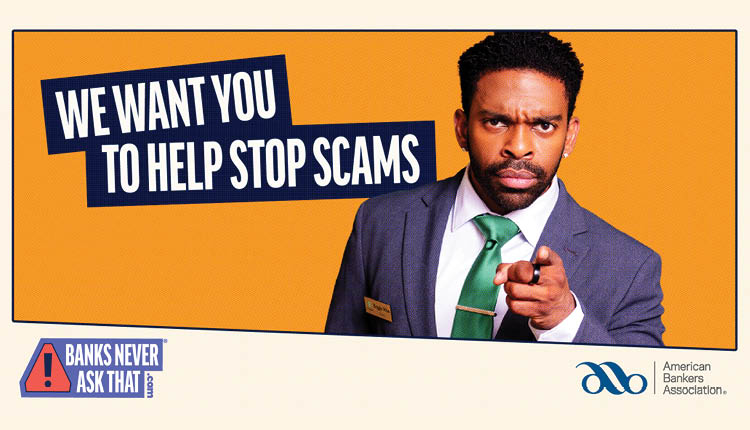
First Interstate is joining the American Bankers Association and banks across the country for the 2026 #BanksNeverAskThat campaign. The national consumer education campaign begins Oct. 1 during National Cybersecurity Awareness Month.
This year’s campaign encourages people to become Scam Slayers. A Scam Slayer recognizes suspicious requests, pauses before acting, and takes steps to protect personal and financial information.
More than 2,500 banks have participated in the campaign since it began.
Every day, scammers use fraudulent emails, text messages, and phone calls to impersonate banks, government agencies, law enforcement, businesses, and people their targets trust.
Nearly three in four Americans have experienced an online scam attempt, according to a 2026 report from the U.S. House Committee on Financial Services. A separate study from Gallup and the Stop Scams Alliance estimated that Americans lost $68 billion to scams in 2025.
“Scammers are constantly adapting their tactics, but many fraud attempts continue to start with the same warning signs,” said Paul Benda, Executive Vice President, Risk, Fraud and Cybersecurity at the American Bankers Association. “Unexpected contact, urgent demands, pressure to move money, and instructions to keep the situation secret are all red flags that should give consumers pause. When people know what to look for, they can often stop scams before they start. Raising awareness of those warning signs is one of the most effective ways banks like First Interstate can help consumers protect themselves from fraud.”
Watch for these common warning signs and take action before a scammer succeeds:
Scammer Warning Sign | What to Do |
|---|---|
You are pressured to open a link | Block the sender and do not click |
You receive an unexpected call and are told to keep it secret | Hang up |
You receive an attachment you were not expecting | Delete the message |
You are asked for a PIN, password, Social Security number, or other sensitive information | End the conversation |
You are pressured to log in to a payment app or send money | Block and report the request |
You are told to click, pay, or respond immediately | Pause and verify the request through a trusted source |
First Interstate will never contact you unexpectedly and ask for:
- Your full Social Security number
- Your account number or balance
- Your debit or credit card number
- Your PIN
- Your password
- Your Online Banking credentials
If someone contacts you claiming to be from First Interstate, do not rely on the phone number, email address, or link they provide. Caller ID information can be altered to make a call appear legitimate.
End the conversation and contact us using a trusted number, such as the number on the back of your debit or credit card. You can also call our Client Contact Center at 855-342-3400.
Throughout October, First Interstate will share #BanksNeverAskThat tips and campaign content on social media.
Visit banksneveraskthat.com for scam prevention tips, videos, and an interactive quiz that reveals what kind of Scam Slayer you are. Spanish-language resources are available at bancosnuncapideneso.com.
You can also explore more fraud prevention resources at firstinterstatebank.banzai.org/wellness/topics/fraud-protection
If you receive a suspicious email, text message, phone call, or website that claims to be from First Interstate, report it at firstinterstate.com/support/report-suspicious-activity